DeepSeek's Super-Agent Takes On Claude Code
DeepSeek open-sourced Super-Agent, an always-on coding agent pitched against Claude Code, and developers are split on whether the router-and-workers design holds up.
DeepSeek just did to coding agents what it did to foundation models last year: shipped something free, open, and aimed squarely at the market leader. On October 31, the company open-sourced Super-Agent, a research prototype that sits inside a GitHub repo and works issues on its own. Bloomberg and the South China Morning Post both framed it the same way within hours, as DeepSeek's answer to Anthropic's Claude Code. By the next day, developers were picking the architecture apart in public threads, and honestly, that part is more interesting than the release itself.
What changed
DeepSeek's dsh-superagent-prototype landed on GitHub under an MIT license, built on top of DeepSeek Harness, the company's internal agent tooling. It's scoped to one repository at a time. When someone on an allowed list asks for something, through a GitHub comment or, optionally, a message in Feishu, the system opens a work item, spins up its own dedicated agent session and working directory, does the work, and replies in the original thread, usually with a pull request. A web panel surfaces anything that still needs a human.
github.com/deepseek-ai/dsh-superagent-prototypeDeepSeek is careful not to oversell it. The README calls it "for reference only, not an official DeepSeek product," and says outright that the published code doesn't match DeepSeek's internal version. Some of what's described in the accompanying writeup is a future direction, not something you can run today. The repo had already crossed 10,000 stars within a day of going up.
Why it matters
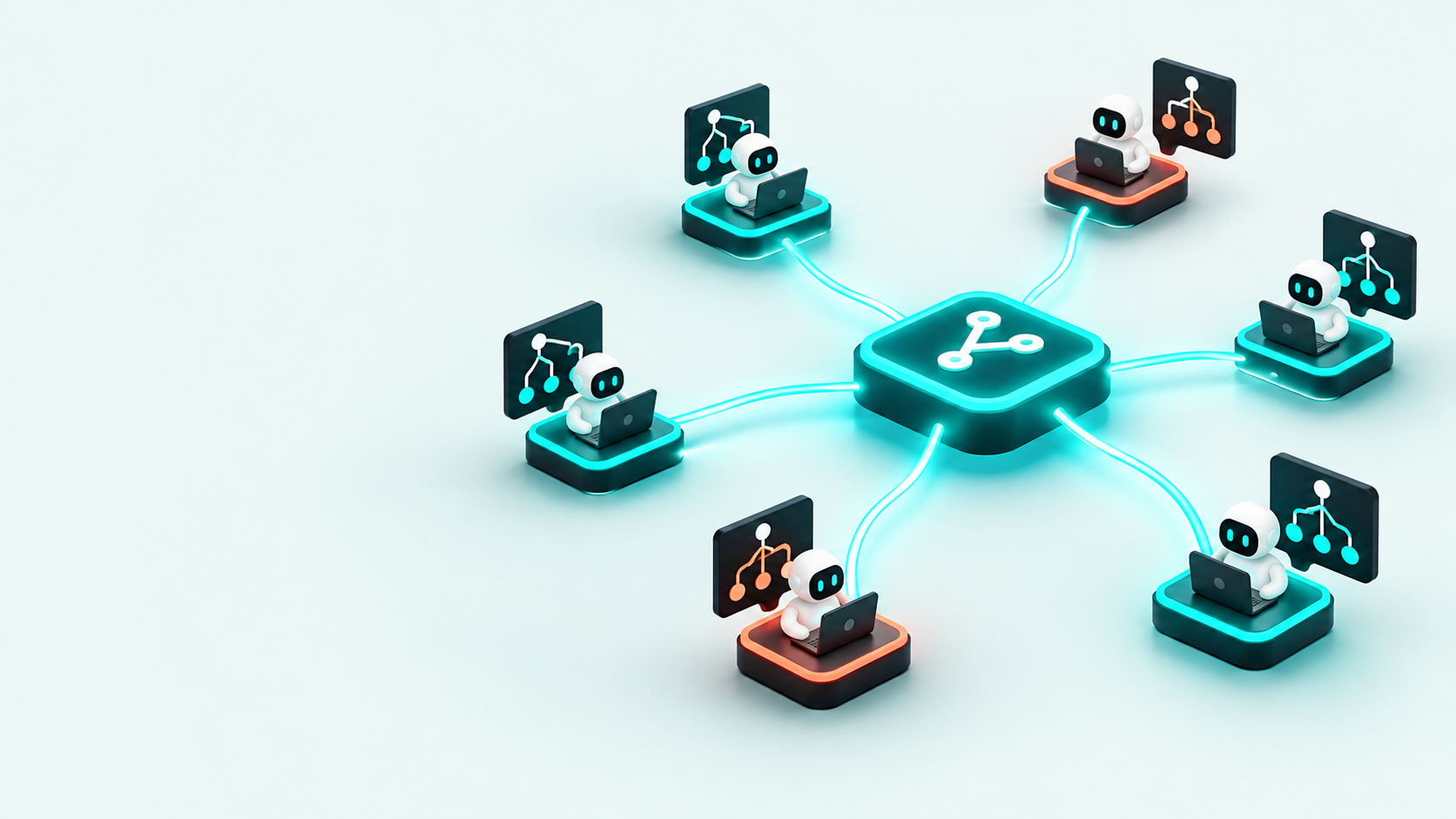
The interesting part isn't the model underneath. It's that DeepSeek shipped an architecture, not a benchmark. Super-Agent splits the job into a cheap router that triages incoming requests and heavier "worker" agents that actually do the coding, each with its own isolated context. That's a direct answer to the complaint practitioners have been making about Claude Code and Codex for months: every new task means reopening a session, re-explaining where things left off, and rebuilding context from scratch. An always-on agent that already knows the repo and keeps its own memory per task is a different product category than a CLI tool you drive by hand.
It also reframes where the competition is happening. Anthropic and OpenAI have spent 2026 trading frontier-model benchmarks against each other. DeepSeek just made a different argument: that the next fight is over who owns the orchestration layer sitting on top of the model. And it gave that argument away for free, which is the same move that forced pricing down across the industry last year.
What people are saying
Reaction split fast between people excited about the architecture and people unconvinced it's new.
"DeepSeek's new Super-agent prototype might be a glimpse of how the next generation of coding agents will work," wrote Kai (@hqmank), pointing at session management as the real pain point in Claude Code and Codex today.
AGTP (@AGTPinsights), who tracks DeepSeek's releases closely, broke down the mechanics in a thread and pointed out that the team behind it is the same one that built DeepSeek Harness. That's useful context for anyone trying to figure out how much of this is genuinely new versus a repackaging of existing internal tooling.
Not everyone's convinced. Some of the pushback in developer threads amounts to: a bot that watches a GitHub repo and opens PRs isn't new, it's a known pattern with a new name attached. Fair point. DeepSeek hasn't published formal benchmarks for the speed or quality claims floating around the release, so treat those as marketing until someone outside the company runs an independent test.
What it looks like in practice
Strip away the framing and the workflow is straightforward. Someone comments on a GitHub issue, or messages the team's Feishu channel if that's wired up, describing a bug or a feature request. The router agent reads it, decides it's real work, and opens a work item. A worker agent spins up in its own session, with its own slice of the repo's context, and goes to work: reproduces the bug, writes the fix, runs the tests. When it's done, it opens a PR and replies in the original thread. Nobody had to open a terminal, paste in file paths, or remember what the agent already knew from last time.
Builders running n8n already know this shape. A router node that classifies incoming work and hands it off to the right sub-workflow, each running with its own isolated state, is the same pattern behind a lot of AI-agent automations already live in production, just applied here to an entire coding workflow instead of a support inbox or a lead-qualification pipeline.
What to do about it
- Don't take DeepSeek's efficiency or speed claims at face value. No independent benchmark exists yet, and the README itself admits the public code lags the internal version.
- If you're already building router-plus-worker patterns in n8n, this is a signal you're pointed the right direction, not something to copy wholesale.
- Read the setup docs before pointing this at a real repository. DeepSeek scopes it to a small, trusted group on purpose, and that boundary matters more than any feature.
- Watch whether Anthropic or OpenAI respond in the next few weeks. That reaction, more than the stars on this repo, will tell you how seriously the labs take it.
The short version
DeepSeek didn't just open-source a coding bot. It open-sourced an argument about where agentic coding goes next, away from single sessions you drive by hand and toward always-on systems that already know the repo. Whether Super-Agent itself is the right shape for that, I'm not convinced yet. But the fact that this is the question everyone's suddenly arguing about is the actual news.
Members are already arguing about this.
Every post gets picked apart in the community. Log in, then open WhatsApp from your dashboard.